
By: Sharene Kacyra, Project Specialist
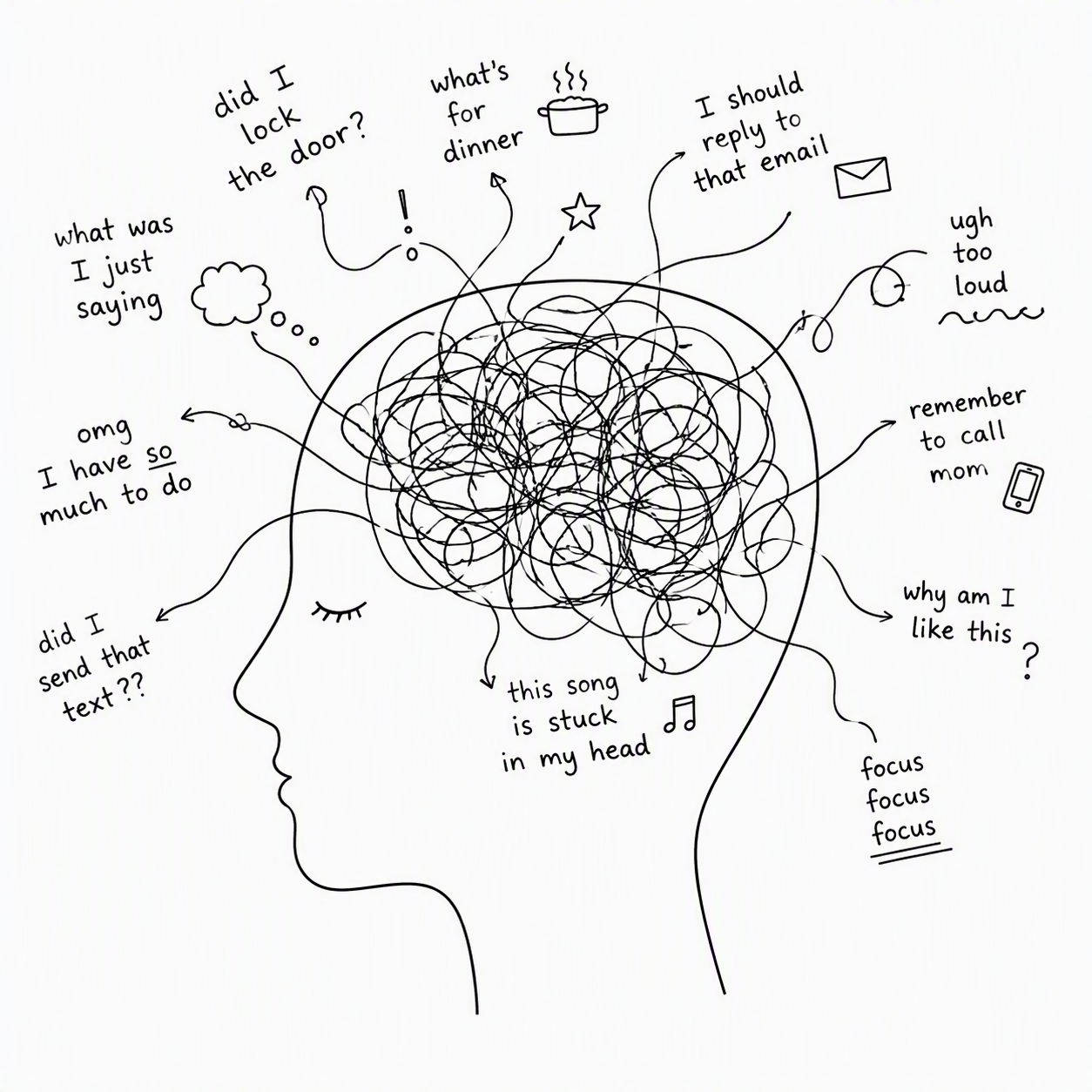
Have you ever felt too disorganized, too emotional, or overwhelmed a lot of the time? Anxious? Been told you don’t try hard enough? Does criticism feel crushing? Do you overwork and people-please? If so, there’s a chance what you’re struggling with is ADHD.
When people think about ADHD, they usually think about focus, attention, and hyperactivity. But ADHD isn’t just about attention or the ability to sit still. It affects executive functioning, emotional regulation, motivation, energy, and more.
ADHD, or attention deficit hyperactivity disorder, is a neurodevelopmental condition with three main types. Predominantly inattentive type tends to show up as being easily distracted, forgetful, or losing items. Predominantly hyperactive-impulsive type can look like trouble sitting still, interrupting others, or fidgeting. Combined presentation is a mix of both.
The diagnostic criteria were originally built around observations of young hyperactive boys, which led to real bias in how ADHD gets diagnosed. It focused on observable behaviors such as being disruptive in class, not being able to sit still rather than how it shows up in girls or adults, who often present very differently. As a result, ADHD in girls and adults is frequently misdiagnosed as anxiety, depression, burnout, or other mental health issues.
A core part of ADHD is difficulty regulating emotion. For me, when it’s hard to stay on task, it’s not as simple as cutting myself some slack. I get so overwhelmed that I can’t function, which leads to guilt and shame about not being able to complete tasks like a “normal” person. Those thoughts and emotions make me feel like I’m constantly disrupting myself from the inside. Why can’t I just do what everyone else is doing? What is wrong with me? The emotional side of ADHD and the self-doubt it can cause is often overlooked.
My whole life, I felt like something was off, like something was missing. At different points I was misdiagnosed with anxiety and depression, which isn’t surprising. Going through life unable to do things I knew I was capable of, always bracing for the next screw-up, of course made me anxious. And crashing after being constantly overwhelmed probably looked like depression. ADHD was never on the table.
Then, when my son was evaluated in fourth grade, his doctor suggested I get evaluated too, since ADHD tends to run in families. That’s when the pieces came together. When I got my diagnosis, I felt relief and grief at the same time. Relief because I finally had an answer and felt validated, and grief for how much unnecessary suffering I put myself through, how much time and potential I lost, and how much of it could have been avoided with an earlier diagnosis.
Living with ADHD, I know firsthand what it’s like to let guilt and shame compound everything you do, to replay every bad decision, and to constantly wonder where you went wrong. Getting diagnosed showed me that this was a neurological difference making life harder, not a lack of effort, not being “too emotional”. If any part of this sounds familiar, I want you to know the same thing: it’s not a character flaw, and you’re not alone. Understanding what’s actually going on is the first step toward giving yourself the support, and the grace, you deserve.
If this resonates with you, you’re not alone. For more information, visit CHADD (chadd.org), ADDA (add.org), or talk to a healthcare provider who specializes in ADHD.